-
Choose ripe apples or “ugly” fruit to reduce waste, and wash them.
Bonne Maman's tips: Use yellow apples such as Golden Delicious, but you can also use more acidic varieties such as Granny Smith. It's up to you, as the recipe doesn't specify. It's a matter of taste!
-
Cut the apples into quarters and add lemon juice immediately to prevent them from oxidizing (adjust the amount according to taste).
Bonne Maman's tips: To further prevent oxidation, cut the apples into pieces, place them in a dish with lemon juice, and cover with plastic wrap. Add water to the bottom of the dish and place it in the microwave for a few minutes to pre-cook. This prevents oxidation from accelerating.
-
Put everything in a juicer or blender to extract the juice.
-
Bring to a boil in a saucepan. Sprinkle in the sugar.
-
Cook until the texture thickens and the fruit's natural pectin gels.
Bonne Maman's tips: To check if the jelly has set, do the plate test: place a few drops of the mixture on a plate, wait a few minutes for it to cool, dip your fingertip into the mixture and check if it sticks. If it does, the jelly is ready. If the mixture drips too much (too runny), continue cooking.
-
Add lemon, cinnamon, cloves...
Bonne Maman's tips: To check whether the jam has set, pour a drop onto a plate that has been placed in the refrigerator beforehand, then tilt it: if the drop slides, the jam is not cooked enough. If it sets, it's ready!
-
At the end of cooking, remove from the heat and skim off any foam that forms on the surface.
-
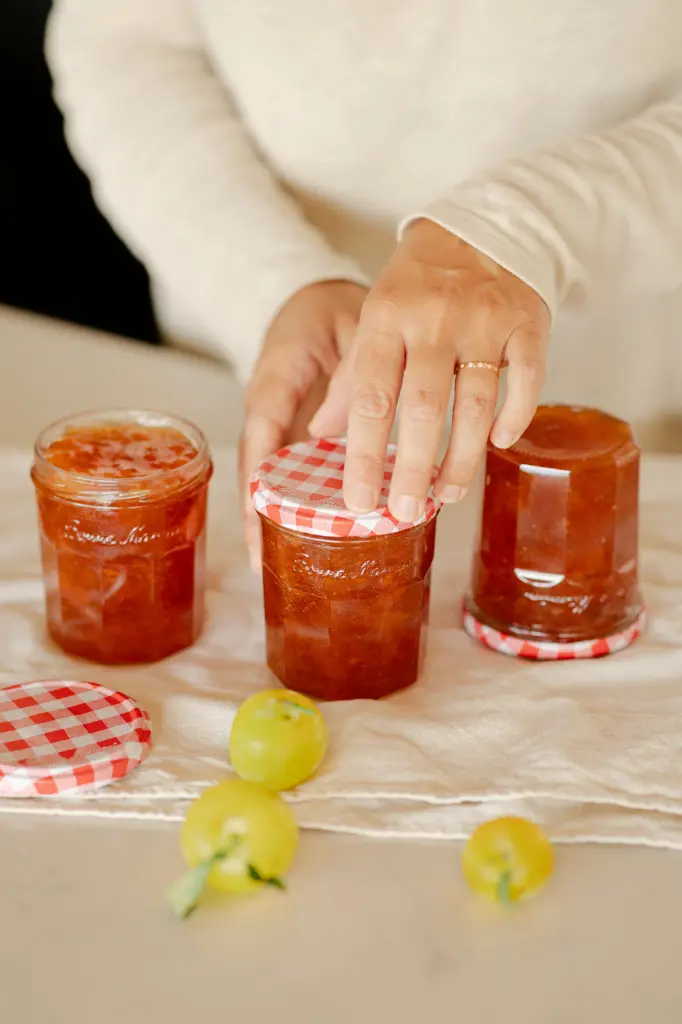
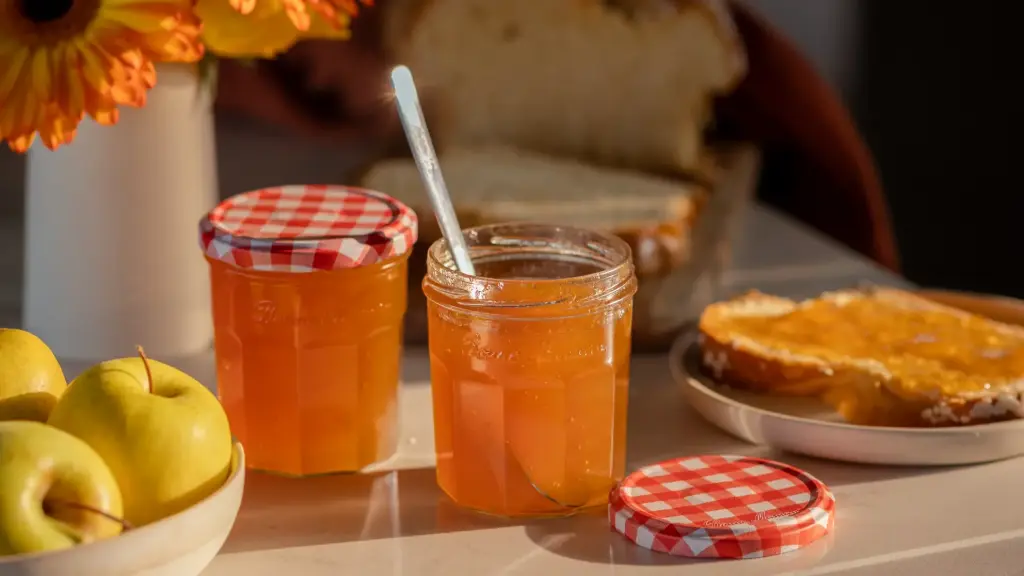
Immediately pour into jars using a ladle, filling them to the top. Close with the appropriate lids and turn the jars upside down on a tea towel to achieve “self-pasteurization.”
-
Allow the jars to cool before labeling them. You can then store your jams in a cool, dry place for several months.
-
After opening, store your jam in the refrigerator and consume it within one month.

 50 min
 Medium
 Medium
 30 min
 4 .p
4 .p